
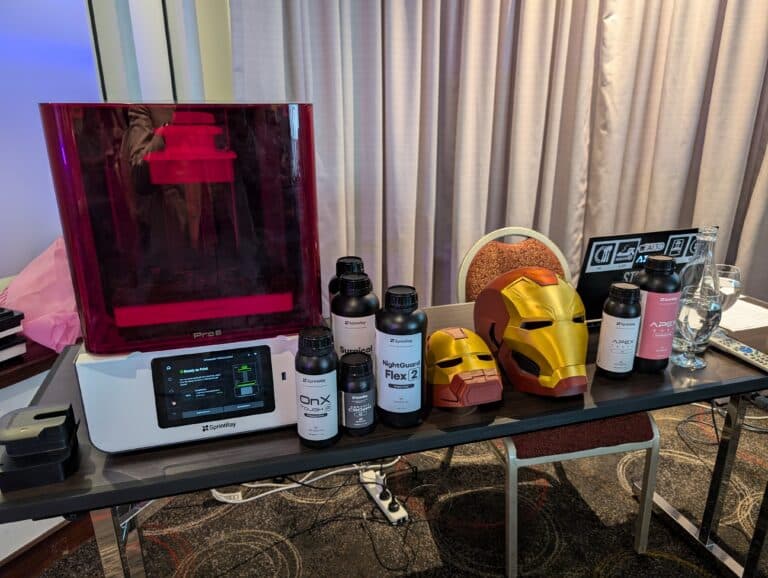
Sprintray Pro55s
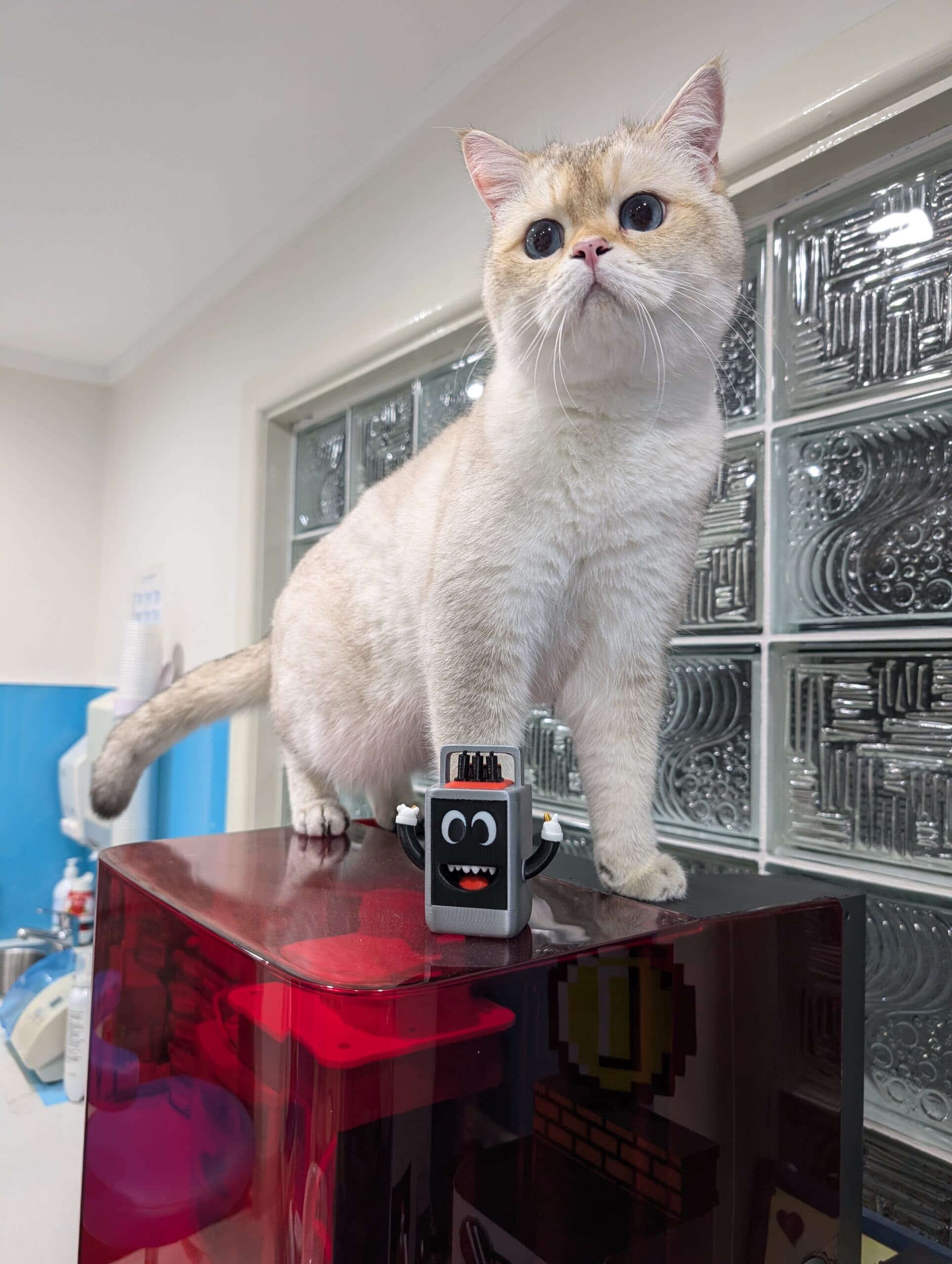
Like it or not, Sprintray has shaken up the chairside 3D printing market like no other company. It has truly made dental 3D printing cool again and they are quite quickly becoming the Apple of the dental 3D printing industry. However, is it all shine and no substance, or does this popular unit come with the goods to back it up? Figure 1: The Sprintray Pro55S – cat not included
Like it or not, Sprintray has shaken up the chairside 3D printing market like no other company. It has truly made dental 3D printing cool again and they are quite quickly becoming the Apple of the dental 3D printing industry. However, is it all shine and no substance, or does this popular unit come with the goods to back it up?
This is a personal and individual opinion on the Sprintray Pro55S. Sprintray nor any of its global distributors have not been involved in the writing or editing of this piece and have not restricted any conclusions made by myself of this product.
Notable features
- Relatively small physical footprint and print volume
- Easy physical set up
- Whisper quiet operation that allows chairside operation
- Heated vat and build platform
- Accessory Arch, Crown and Optical Polish kits that are pricey but do improve workflow
- More-or-less closed resin library
- Cloud-based slicer that isn’t always reliable with respect to object orientation and support generation
- Some precision and accuracy issues in specific prints
- Excellent industry-leading workflow with the ProWashS and NanoCure
Basics
| Printer size | 38.1 x 43.9 x 53.1cm |
| Weight | 120 bananas* |
| Technology | DLP |
| Print volume | Std plate: 10.5 x 5.9 x 20cm Arch plate: 10.5 x 5.9 x 20cm Crown plate 3.8 x 5.1 x 20cm |
| Slicer | RayWare Cloud |
| XY resolution | 55 µm |
| Price guide | US$9500 |
* 1 banana = 0.15kg
Set up
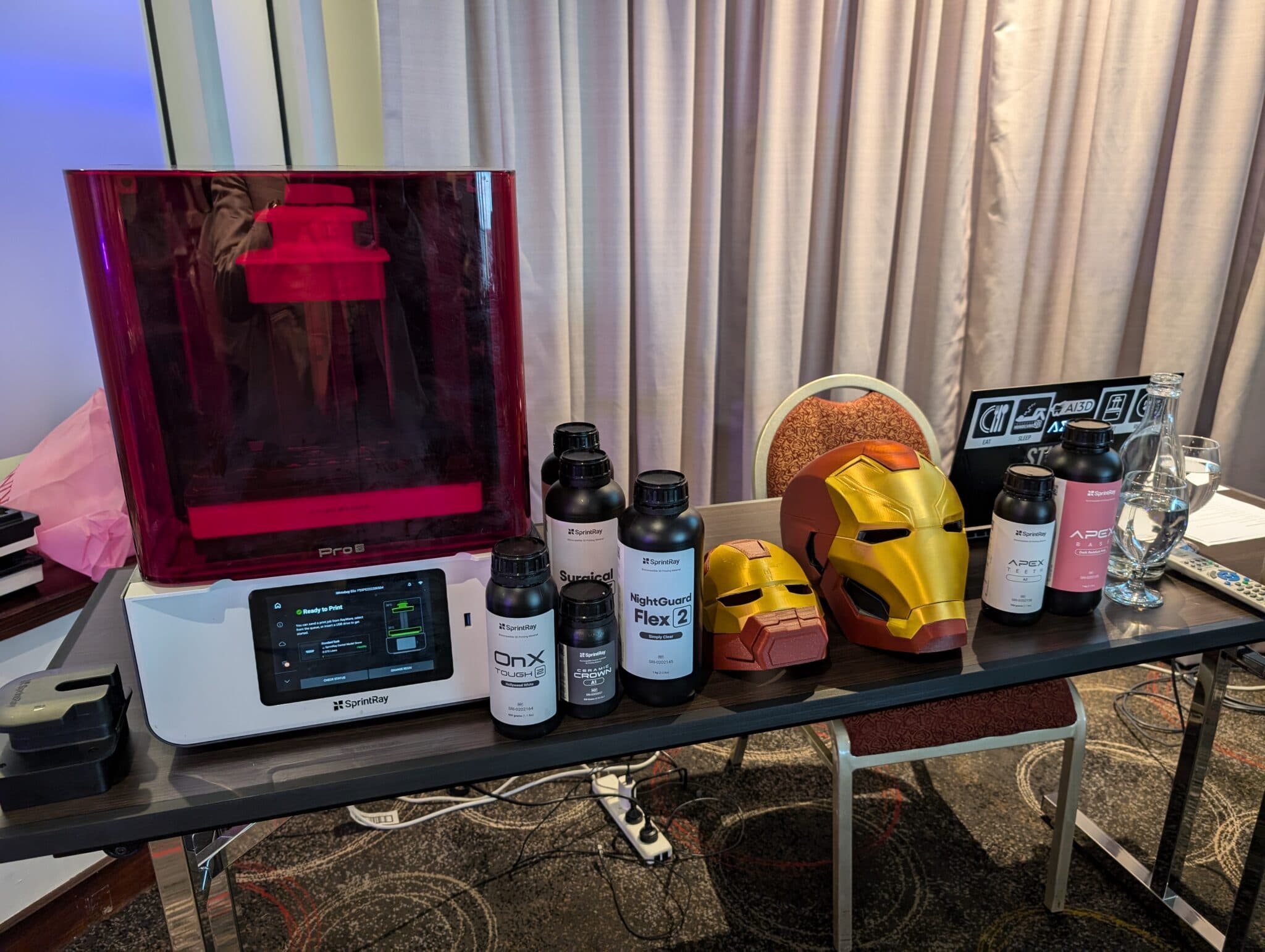
Setting up the Pro55S is pretty easy and it is as “plug-and-play” as you can get. It’s not too heavy so it can definitely be set up from scratch by oneself.
Levelling is factory-performed and hopefully should never need touching as to alter this setting requires external tech support. The touchscreen is nicely positioned and sized and easy to navigate.
Keep your phone handy – you will need to create a Sprintray account to log into the printer, which involves scanning a QR code.
In fact, the whole printer ecosystem functions at its best when its connected online, so make sure your premise has stable internet access.
All Sprintray printers utilize an easy slot-in mechanism when inserting vats – it may be quite tight on initial operation but will “wear in” as the printer is used more.
Some users have reported issues with initial Wi-Fi connection – just keep in mind that installation may not be as smooth sailing as one may think. However my overall experience was overwhelmingly pleasant but that may not be yours.
Software
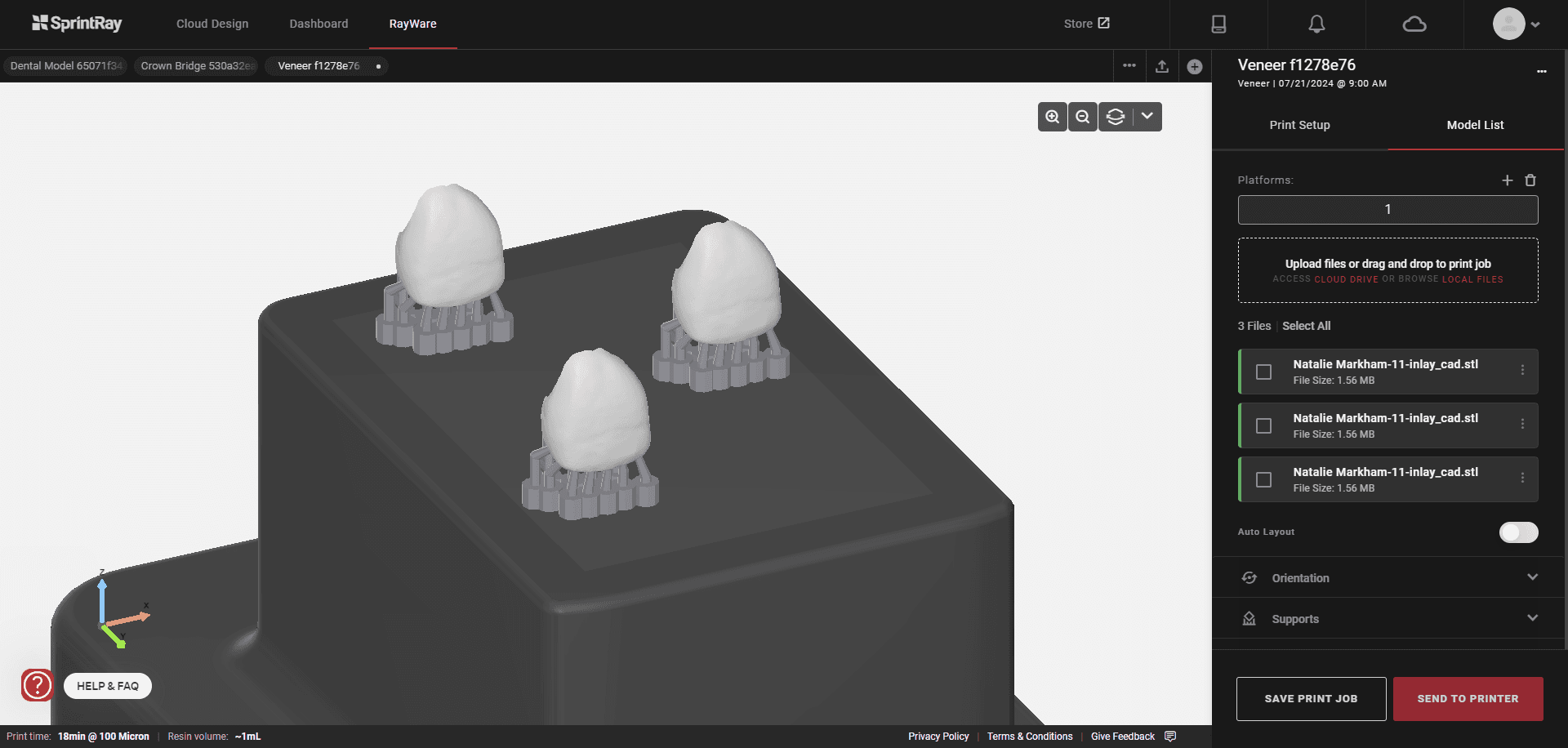
The Sprintray Pro55S uses RayWare Cloud, a cloud-based software, for better or worse. There is a desktop version but it hasn’t been updated in ages, and there are no plans to do so in the future.
RWC is one of the most user-friendly dental slicers out there so it’s perfect for staff delegation and for the less tech-savvy.
It’s really quite easy to navigate and choose your print settings. For the more experienced, it can be annoyingly dumbed down and there is very little customizability.
For most applications, default orientation and support settings work pretty well. Nightguard and denture base settings work nicely! However, I’ve found for others such as restorations and implant-borne temporaries, default orientation and support placement is very hit-or-miss. I’d strongly advise against simply trusting the software blindly.
There are very basic CAD functions such as mesh repair and plane cutting but otherwise there are no additional mesh editing tools.
Resin library
The Sprintray resin library is more-or-less closed, which can be a good thing and a bad thing. It’s good in the sense that we can rest assured Sprintray resins are optimised for their printers, as they’re only dealing with their own materials. As long as you stick to their branded resins, you’ll have the highest chances of print success. However, it does mostly lock you into their system. With support for NextDent and Dentca resins out the window, don’t hold your breath on third party support in the long-term.
The printing experience
The Pro55S has 2 heaters – one for the resin vat and one for the build plate – this increases print success, particularly of highly-filled restorative resins which print more predictably when warmed.
The Pro55S is not a speed demon, but it’s certainly not snail pace. Models orientated horizontally and positioned direct to the build plate can take around 25-35 minutes to print at 100 micron layers using Die and Model 2.0 resin.
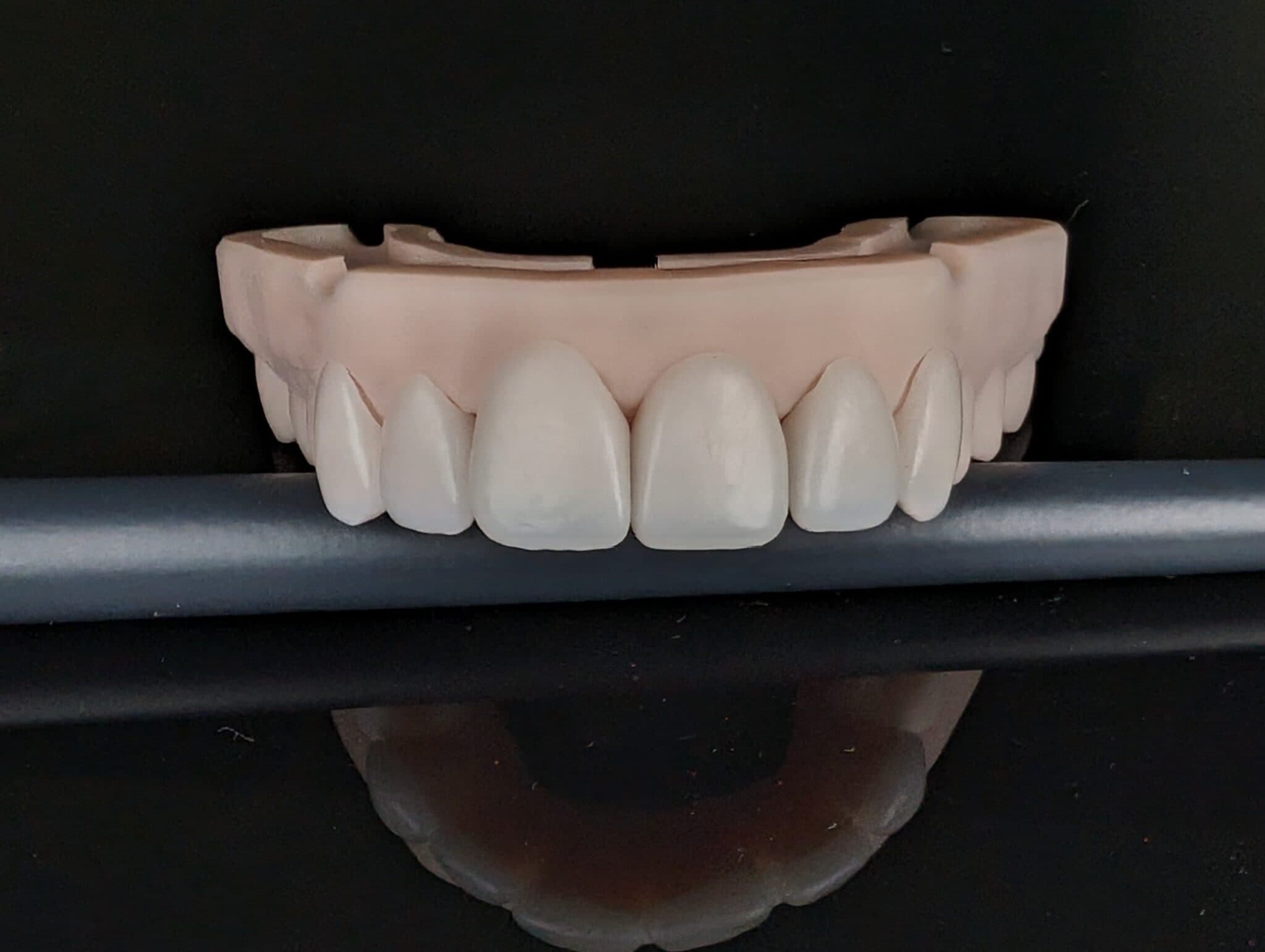
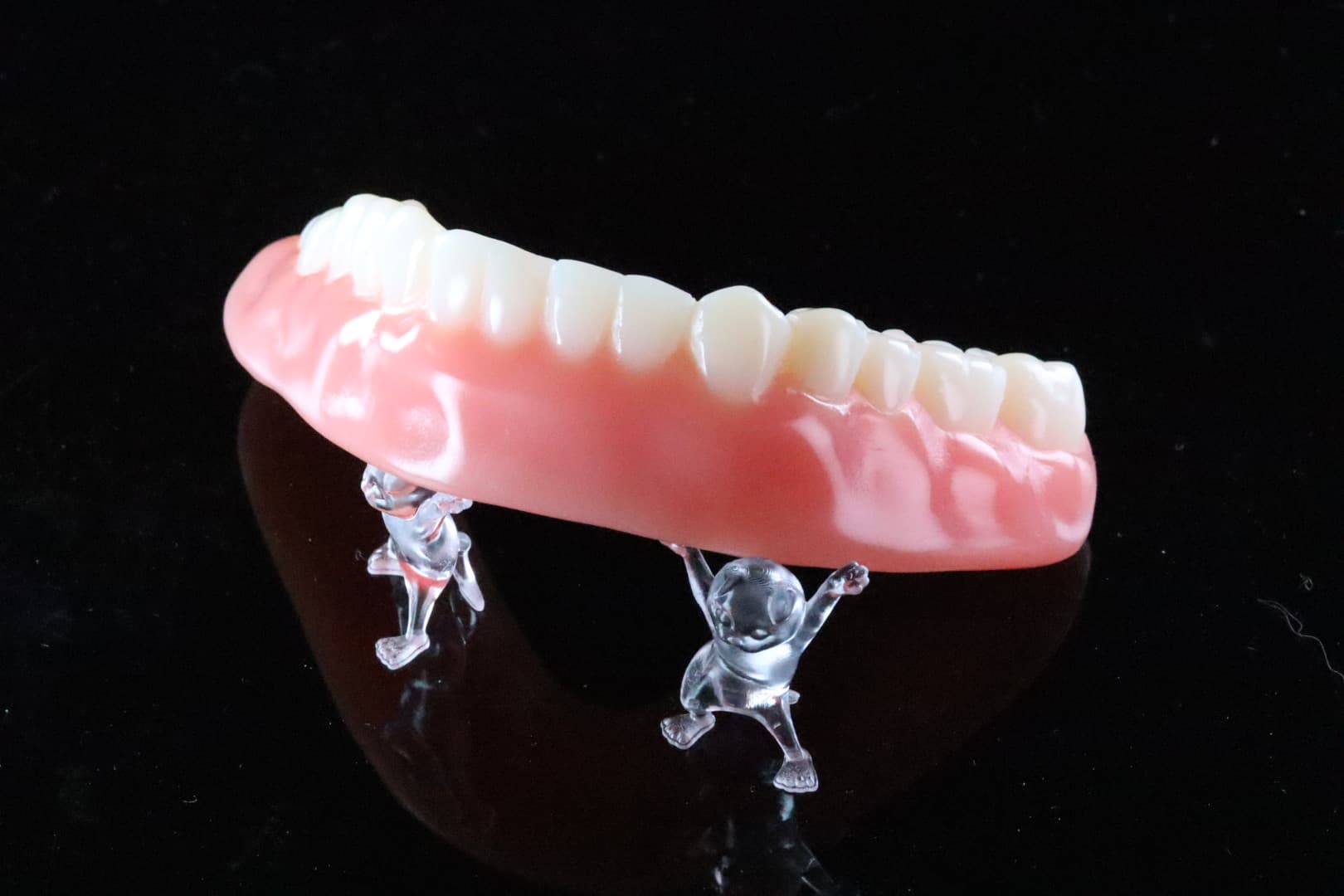
The arch and crown kits can boost the speed significantly. Crowns printed at 100 micron layers out of Sprintray Ceramic Crown can take as little 12-15 minutes. Combine that with a 3-minute cure on the NanoCure. Simply put, there’s no dental 3D printing system out there that does printed restorations as well (besides the new Sprintray Midas). I mean, can your mill produce 10 veneers in 15 minutes? I think not.
That being said, there is definitely a trade-off with the speed with precision and accuracy as I’ve found occasional misfits with veneers and crowns – make sure you have your crowns designed with extra cement offset! In addition, thicknesses less than 0.3mm will risk misprinting, particularly with the Crown Kit. There’s a new “veneer mode” print to offset this, but it’s still not 100%.
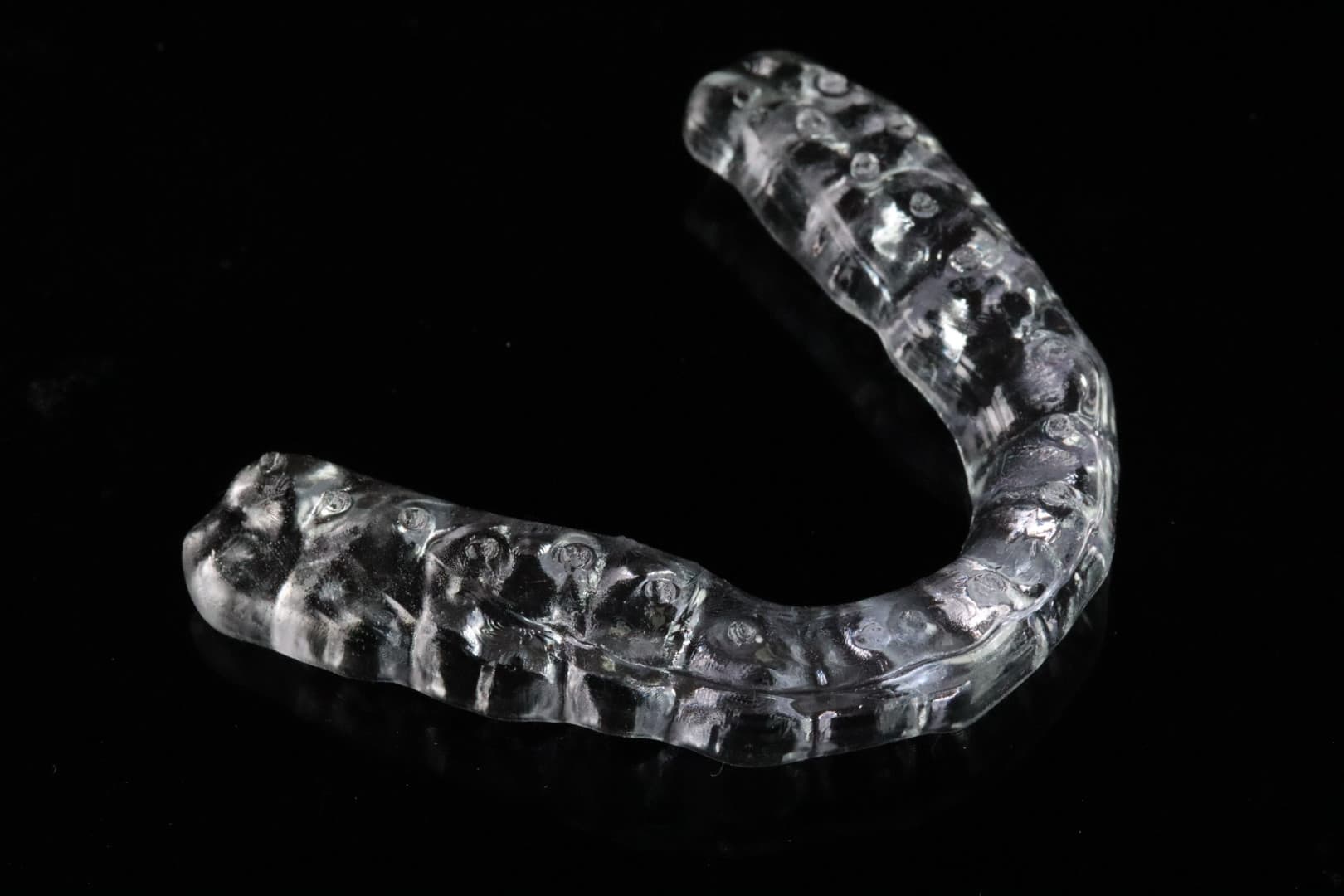
The new Optical Polish tank is a welcome addition to the Sprintray accessory family, and make splints and surgical guides crystal clear, minimising the post-processing involved. These accessories aren’t necessary and they do make the printing experience better – at a price.
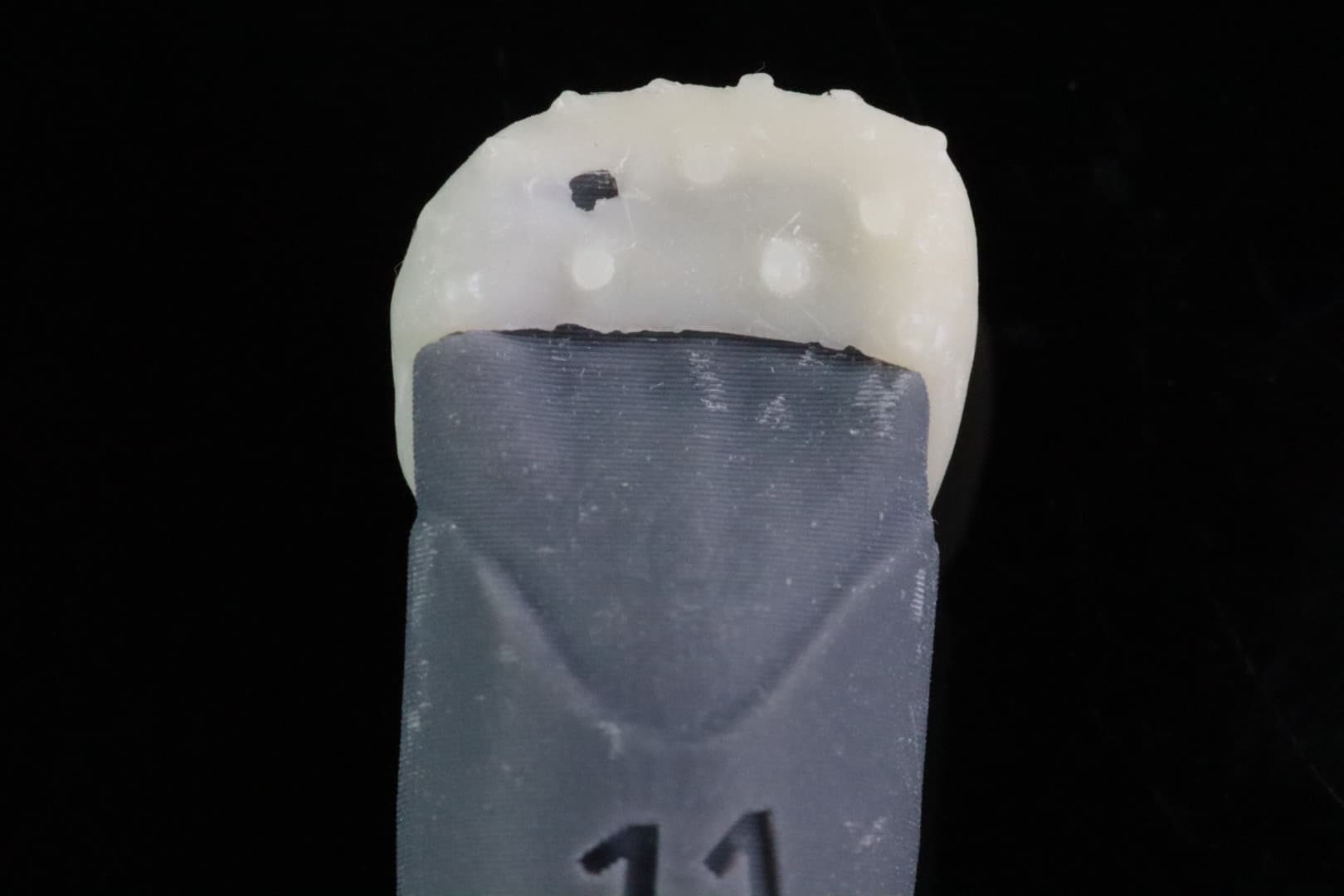
I have also found slumping around supports for nightguards which is a little annoying. In addition, for whatever reason, hollowed models are a pain to remove from my build plate unless they are printed with supports. Solid models tended not to experience this same problem. Small issues like these that you wouldn’t expect for the price point.
Conclusion
The Pro55S is a solid all-round performer which has one of the smoothest workflows out of its competitors. You just have to keep in mind that it is basically a closed system, and that for some very specific applications, the print quality doesn’t always reach the standard one may expect for the price tag. The trade-off is a smooth and easy-to-delegate experience for most users and it’s no surprise that despite its shortcomings, it’s still one of the most popular printing brands in the market. The Sprintray Pro55S proves that you don’t always need to be the best – you just need to have the best experience i.e. it’s not the destination that matters, but the journey!
3 points why you should get it
- Huge resin library
- Workflow is very easy to delegate
- Leading resin development that is more or less unparalleled in the current market
3 points why you shouldn’t get it
- Expensive resins and accessories and mostly closed resin library
- Not as precise and accurate as some of its leading competitors
- Optimised for online-only operation