
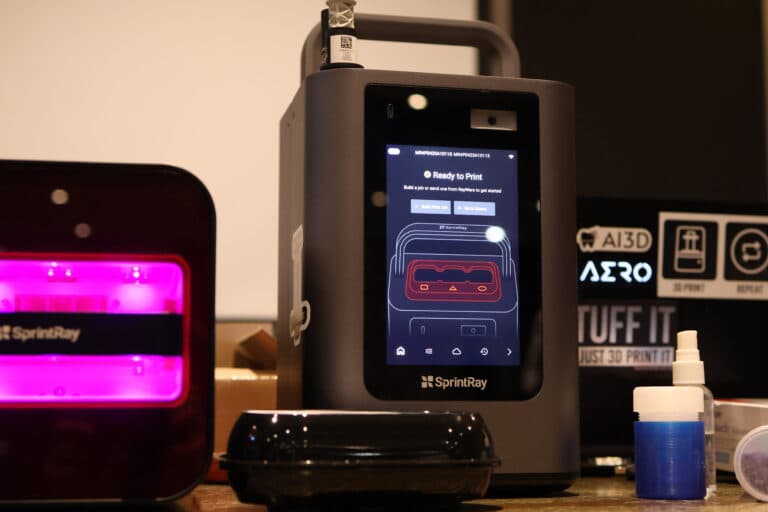
Sprintray Midas
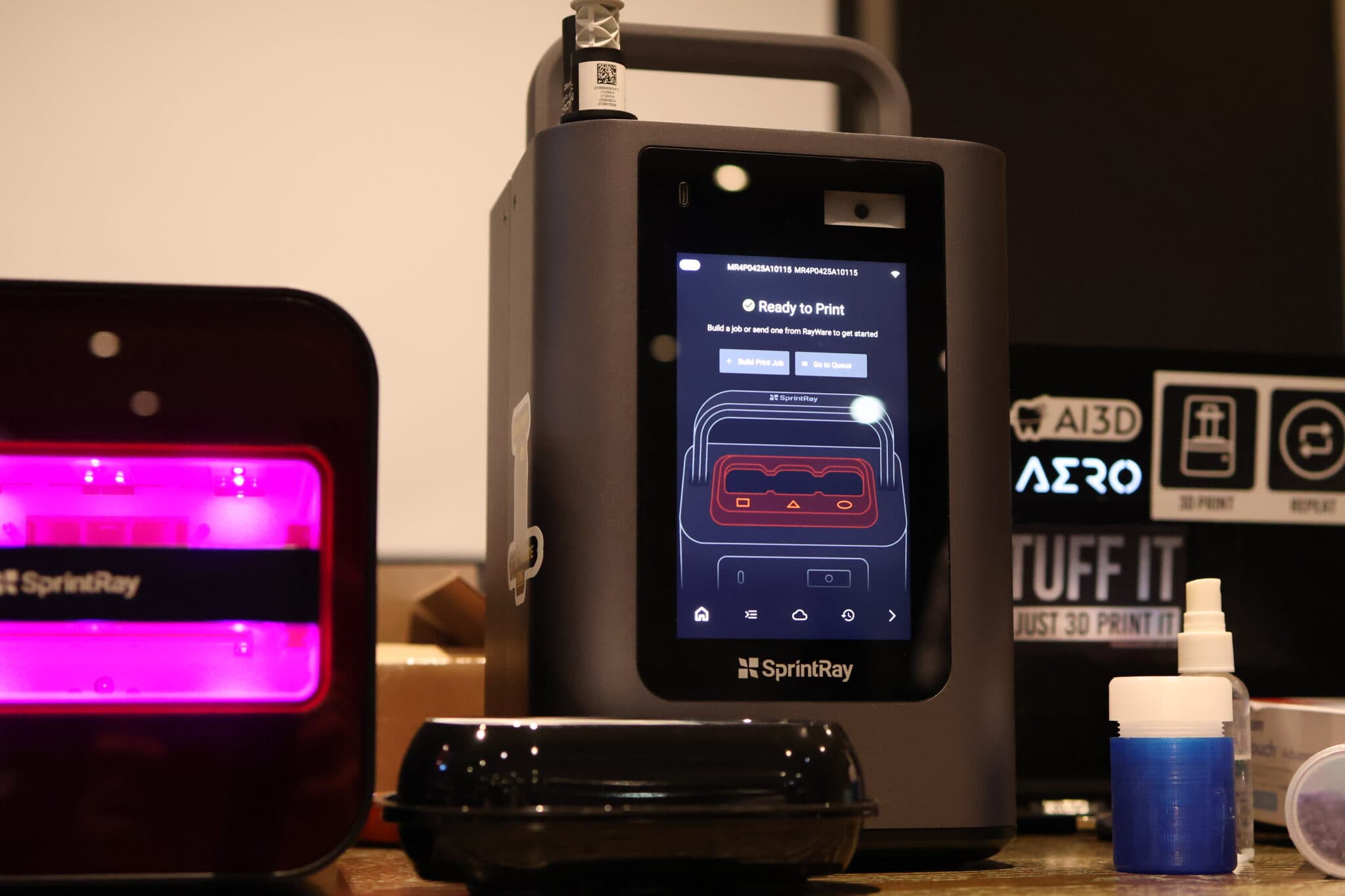
Sprintray went all in with the concept of printed provisional and definitive restorations with the announcement and release of the Midas. Utilising Digital Pressed Stereolithography (DPS), a custom-designed technique that uses pressure to handle highly viscous ceramic-filled resins, it claims to be able to print resins which other printers could only dream about printing. Combine that with Sprintray’s traditionally strong focus on user experience, on paper it sounds like the penultimate chairside 3D printer for restorations. Despite its small size, its impact in the dental industry has been significant, but does it live up to the hype?
This is a personal and individual opinion on the Sprintray Midas. Sprintray nor any of its global distributors have not been involved in the writing or editing of this piece and have not restricted any conclusions made by myself of this product.
Notable features
- Ridiculously small physical footprint
- Only prints restorations for now
- Easy physical set up
- Whisper quiet operation that allows chairside operation
- One-and-done capsules that are rather pricey
- Closed resin library
- Cloud-based slicer that is generally reliable and consistent with print orientation and support placement
- Excellent industry-leading workflow with NanoCure
- Complementary design service courtesy of Sprintray AI Studio for 1 year
Basics
| Printer size | 20 x 20 x 37 cm |
| Weight | 67 bananas* |
| Technology | DLP + DPS |
| Print volume | 15 mm diameter, 20 mm height – single 45mm length, 20 mm height – multi |
| Slicer | RayWare Cloud |
| XY resolution | 45 µm |
| Price guide | US$12,000 |
* 1 banana = 0.15kg
Set up
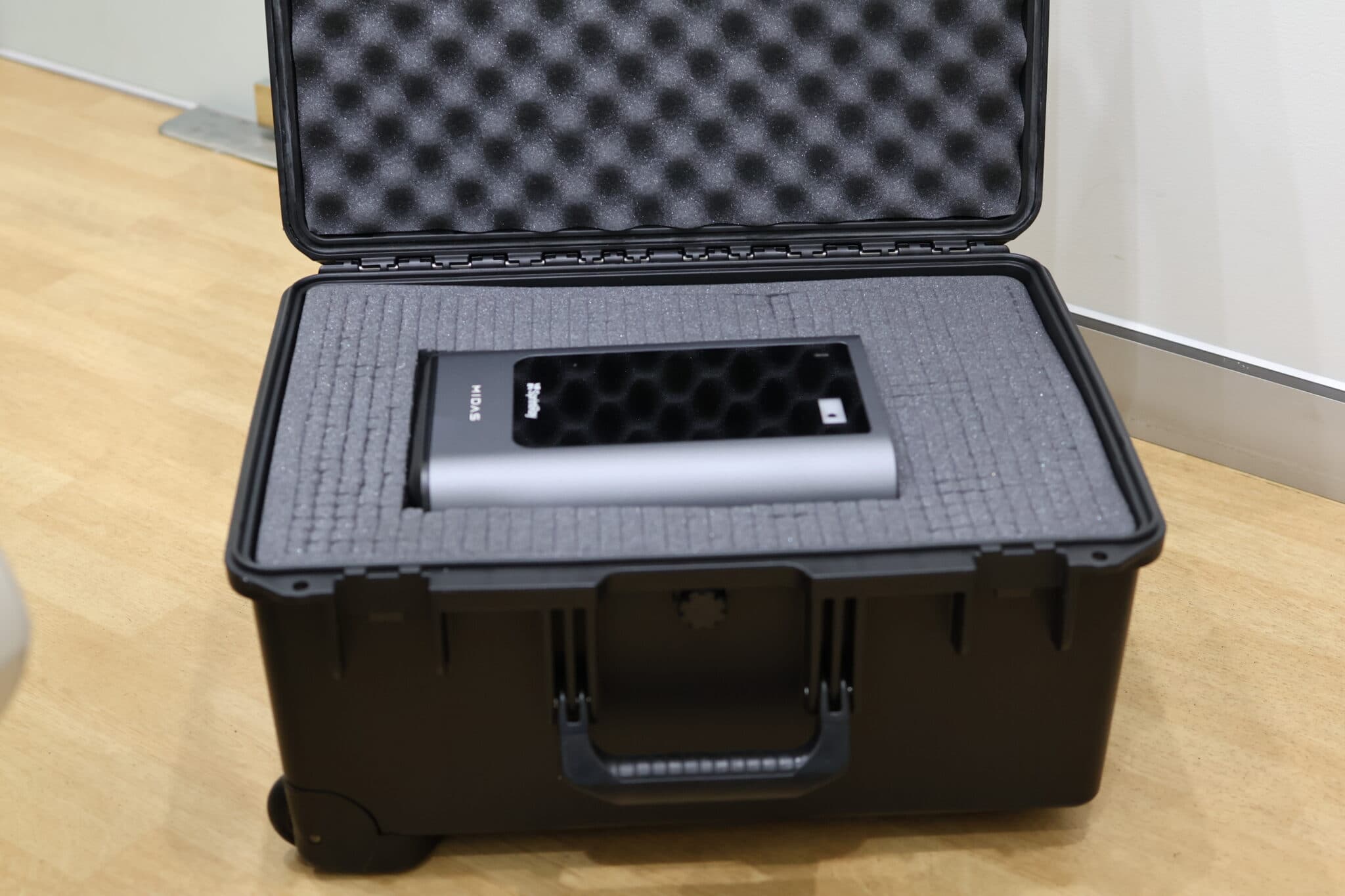
Setting up the Midas, in typical Sprintray fashion, is very easy and it is as “plug-and-play” as you can get. In fact, the whole set up (Midas + NanoCure) is as compact as you can get. It’s incredibly low-profile and designed to be used chairside.
There is no levelling, no calibration. You literally plug it in and away you go. The large touchscreen is nicely positioned and sized and easy to navigate.
Keep your phone handy – you will need to create a Sprintray account to log into the printer, which involves scanning a QR code.
In fact, the whole printer ecosystem functions at its best when its connected online, so make sure your premise has stable internet access.
Honestly, it’s ridiculously easy to set up. To help you on the process is a complementary online course accessible to Midas owners on the Sprintray dashboard, so definitely check it out first before you waste those very expensive capsules.
Software
The Midas uses RayWare Cloud, a cloud-based software. For better or worse, you will need stable and consistent internet connection to fully enjoy the Midas experience.
RWC is one of the most user-friendly dental slicers out there so it’s perfect for staff delegation and for the less tech-savvy.
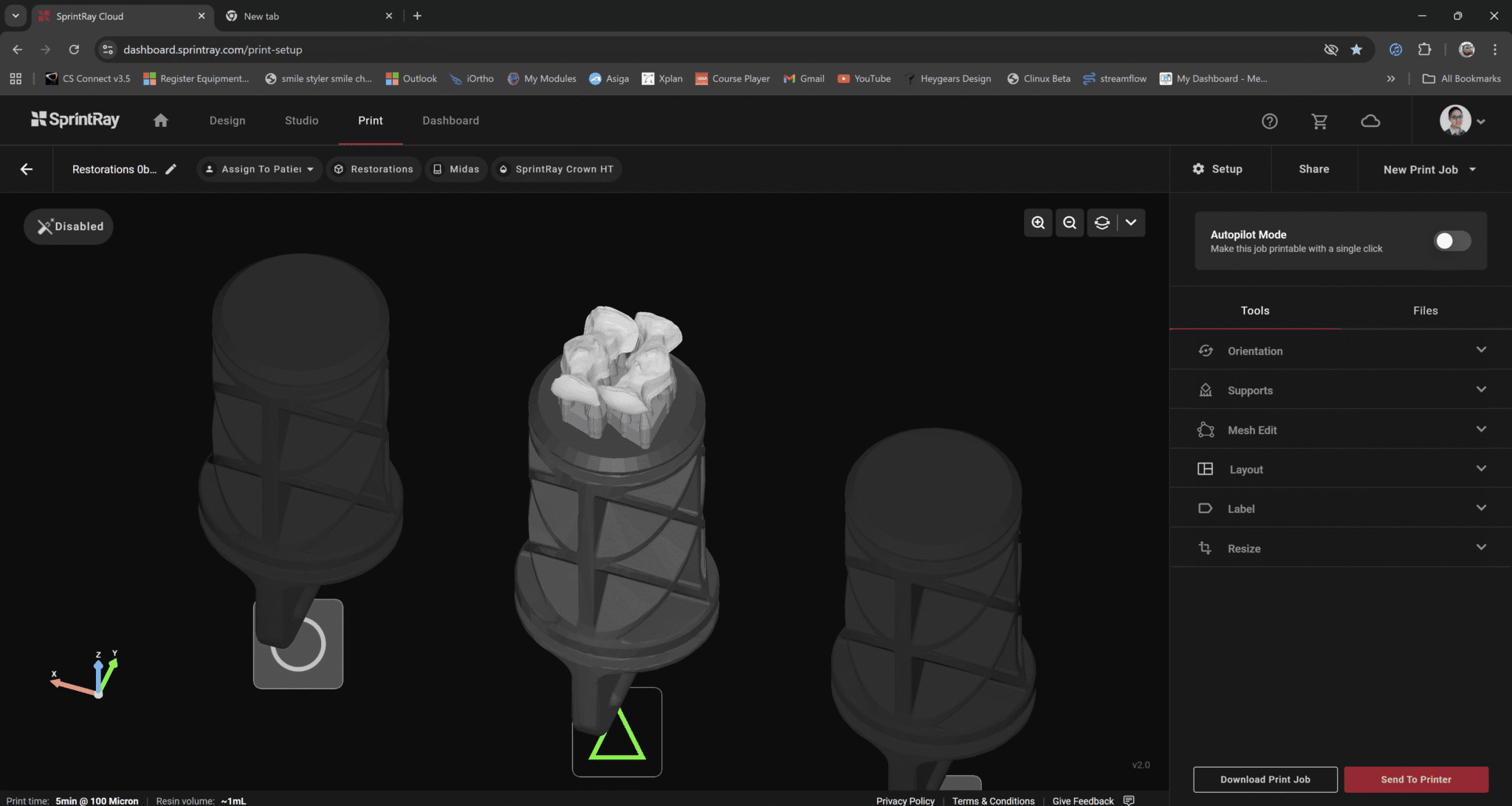
It’s really quite easy to navigate and choose your print settings. RWC will now try to automatically detect the type of restoration to be printed, which is nice when it works, but occasionally it won’t. I’d still advise against simply trusting the software blindly.
That being said, overall RWC does a fine job of automatically orientating restorations and supporting them and I’ve never really had any support-related failures. Supports appear quite thick but will peel off relatively easily. You may be playing a little 3D printing Tetris as you try to squeeze as many restorations into the one capsule!
Resin library
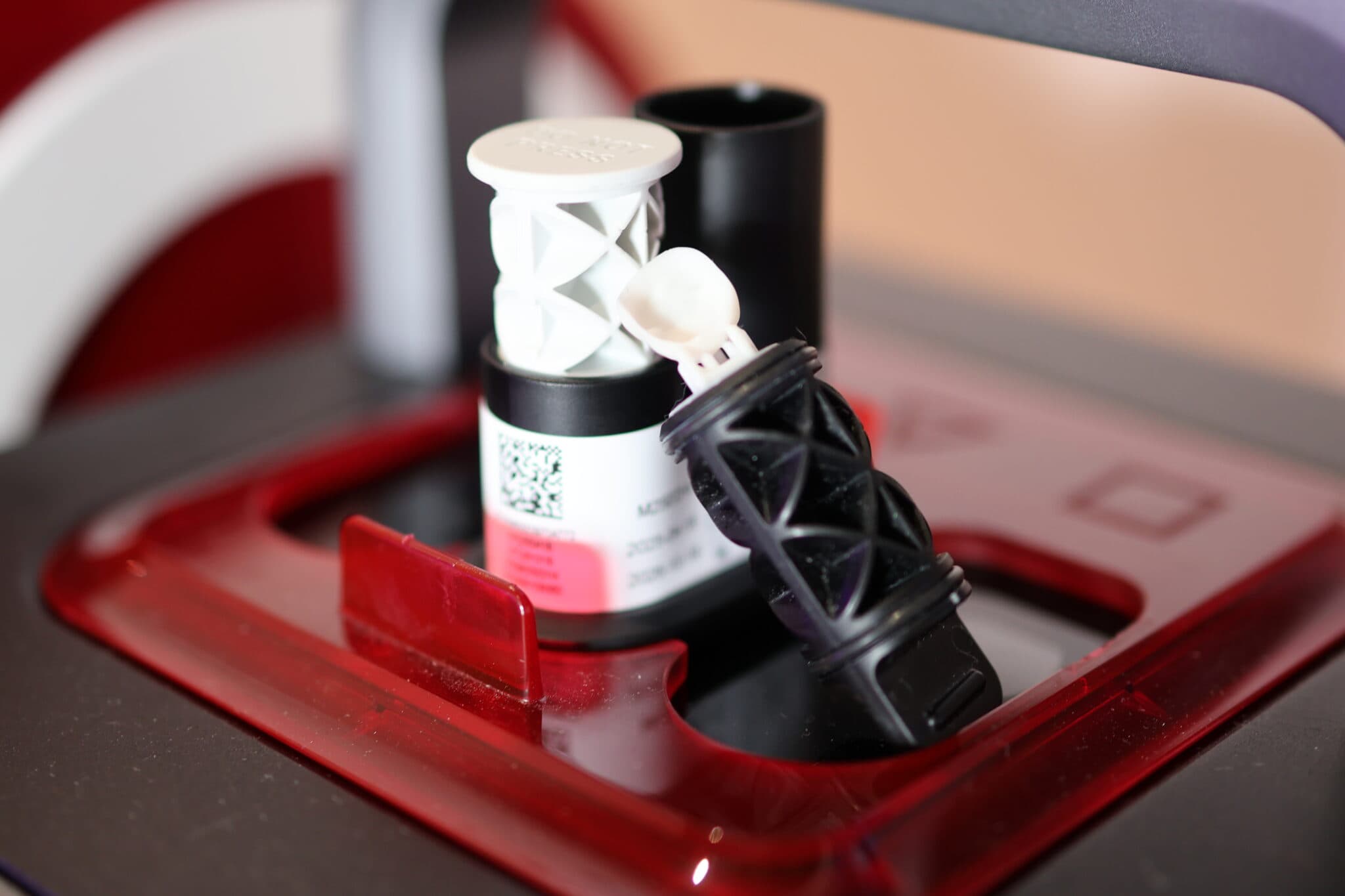
The Elephant in the room: the resin library accessible to the Midas is closed with select opening for specific third party manufacturers. Realistically you’re locked into Sprintray’s (leading) library of restorative resins, which isn’t such a bad thing, as they are certainly leading the pack when it comes to pushing the boundaries of what types of restorations we can 3D print chairside.
The capsules themselves are quite pricey – at around US$30-40 per single capsule (depending on the resin), you’d really want to maximise as many restorations per print as possible. The Midas really makes sense for quadrant dentistry where there are multiple restorations to be done. Sprintray resins for the Midas are definitely leading the pack when it comes to translucency and percentage of ceramic filler contained within the material, with Crown HT sporting a cool 60-65% and Restore boasting an impressive 70%. Sprintray is definitely winning the material race.
Multi-midas capsules will unlock some much-needed versatility in this unit as users will be able to print multi-unit restorations, or even motivational mock-ups using the one capsule. I’m not sure how pricey these will be, but I’m fairly sure they won’t be cheap.
For novice users, please do check out the complementary online Midas workshop in your Sprintray dashboard – it will very likely save you some heartache as the capsules aren’t cheap and your bank account will feel each failure experienced!
The printing experience
The Midas is *almost* fool-proof.
It will guide users on cartridge preparation and placement – make sure you follow these instructions! I will admit I experienced a couple of very avoidable failures by not pushing the plungers down as instructed and not primining them adequately. You’ll make these mistakes once and then never again!
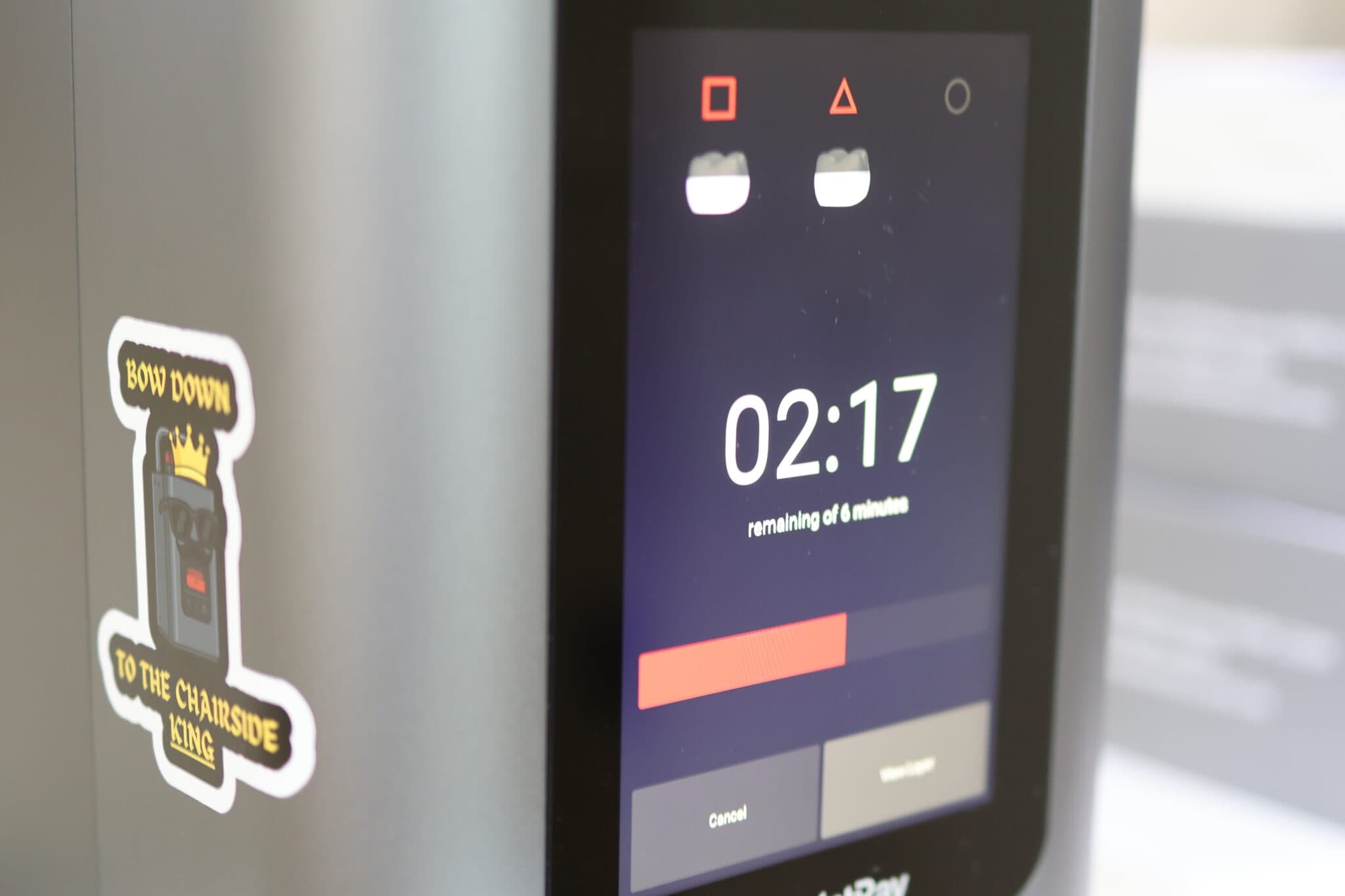
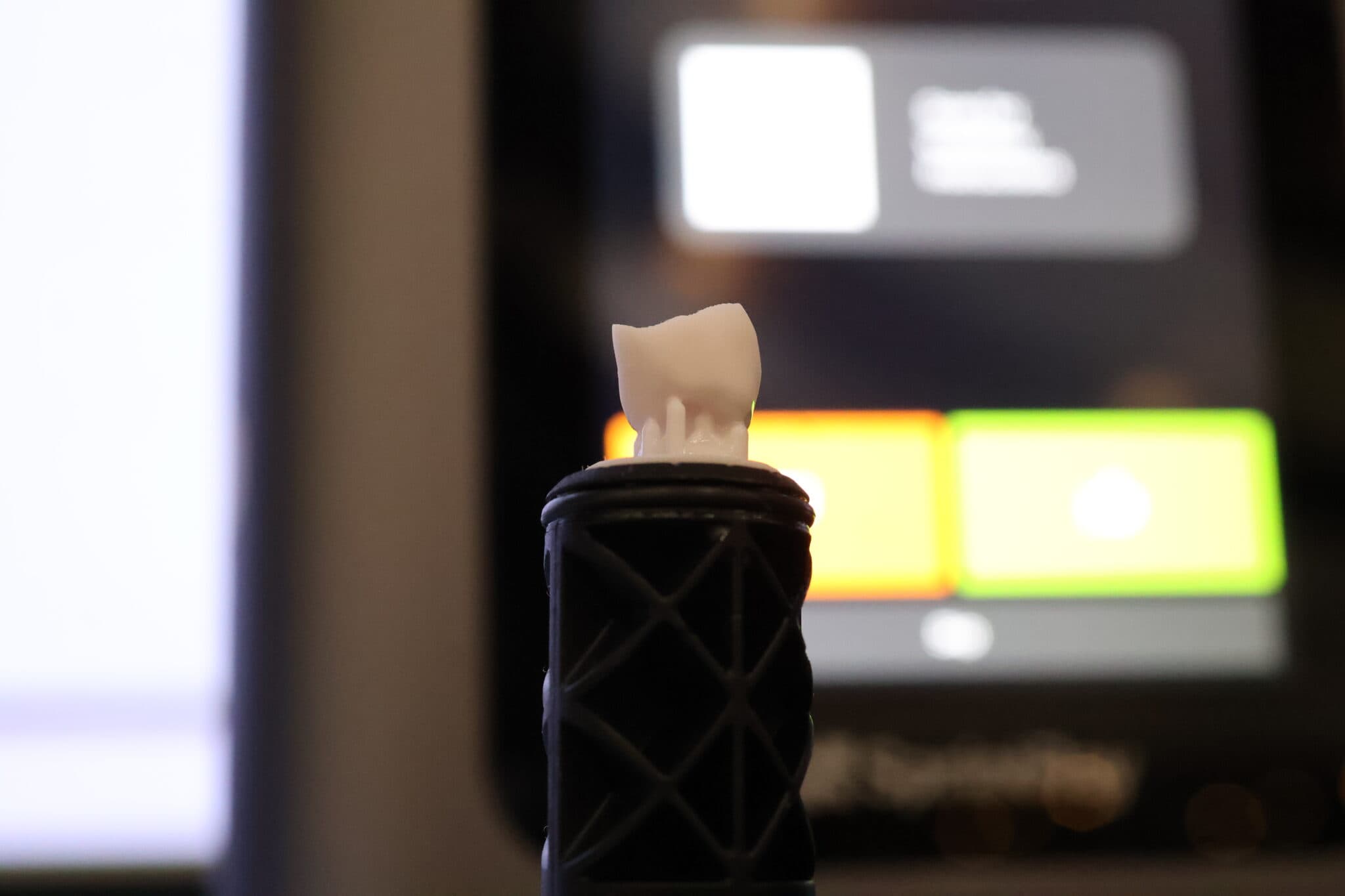
Print times are amazing – you can get print times as low as 5 minutes and even the longest ones will probably take 10 minutes. Crazy industry-leading speed.
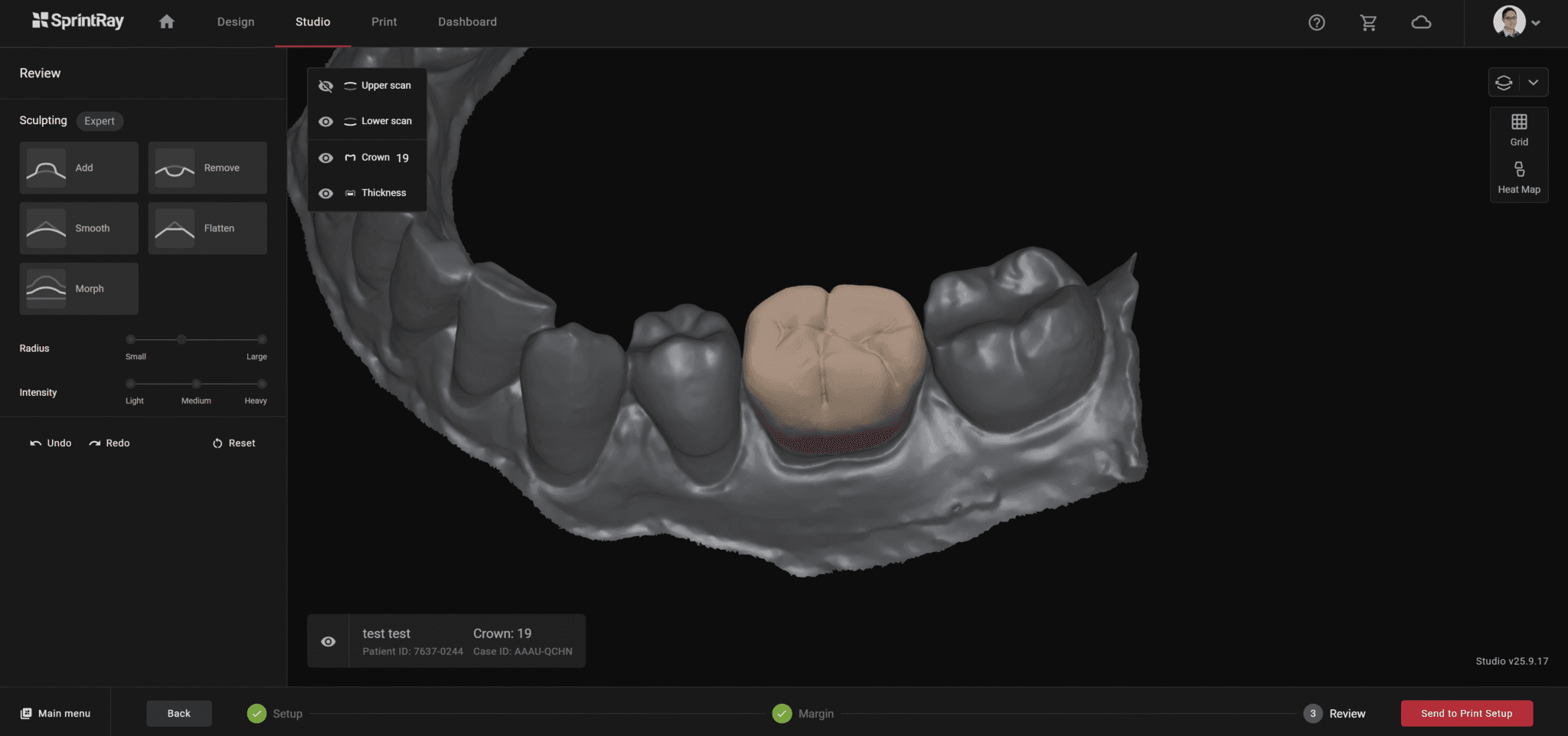
The bottleneck really is the design phase – unless you fork out a hefty sum for Exocad or 3Shape, you may end up using Sprintray Studio (free licence per Midas purchase for 1 year). In my honest opinion, while it is being updated extremely regularly, at this point in time I don’t really think it’s ready for the novice user and a couple of my workshop attendees have reiterated this. Will it get “there”? Quite possibly yes – but it’s going to take time for the software to be updated and upgraded and this is an ongoing process.
The big question is whether many practices can make an investment into the Midas system financially sustainable and profitable. I think in many developed markets, it will make sense for many practices. As clinicians, we all remember trying to place those huge composite restorations directly and struggling with various matrices and bands etc. The Midas can effectively simplify and replace that process and ultimately produce a better restoration in those cases. However, at US$30-40 a pop per capsule, it’s going to be a hard conversation to have in many situations.
Conclusion
The Midas is not just incredible at what it does – it’s a statement from Sprintray that is saying that they’re going all-in into the 3D printed restorations phenomenon. There really is no other alternative in the market so far that does this very specific task so smoothly. What will hamper the experience is the design phase (a fixable problem) and the cost of each one-and-done capsule.
3 points why you should get it
- Industry-leading printable restorative materials
- Workflow is very easy to perform and delegate
- Multi-midas capsules unlock more uses such as mock ups, bridges, multi-unit restorations (provisional/temporary)
3 points why you shouldn’t get it
- Expensive capsules
- “One-trick pony”
- Must incorporate 3D printed restorations in your practice to make this financially viable