
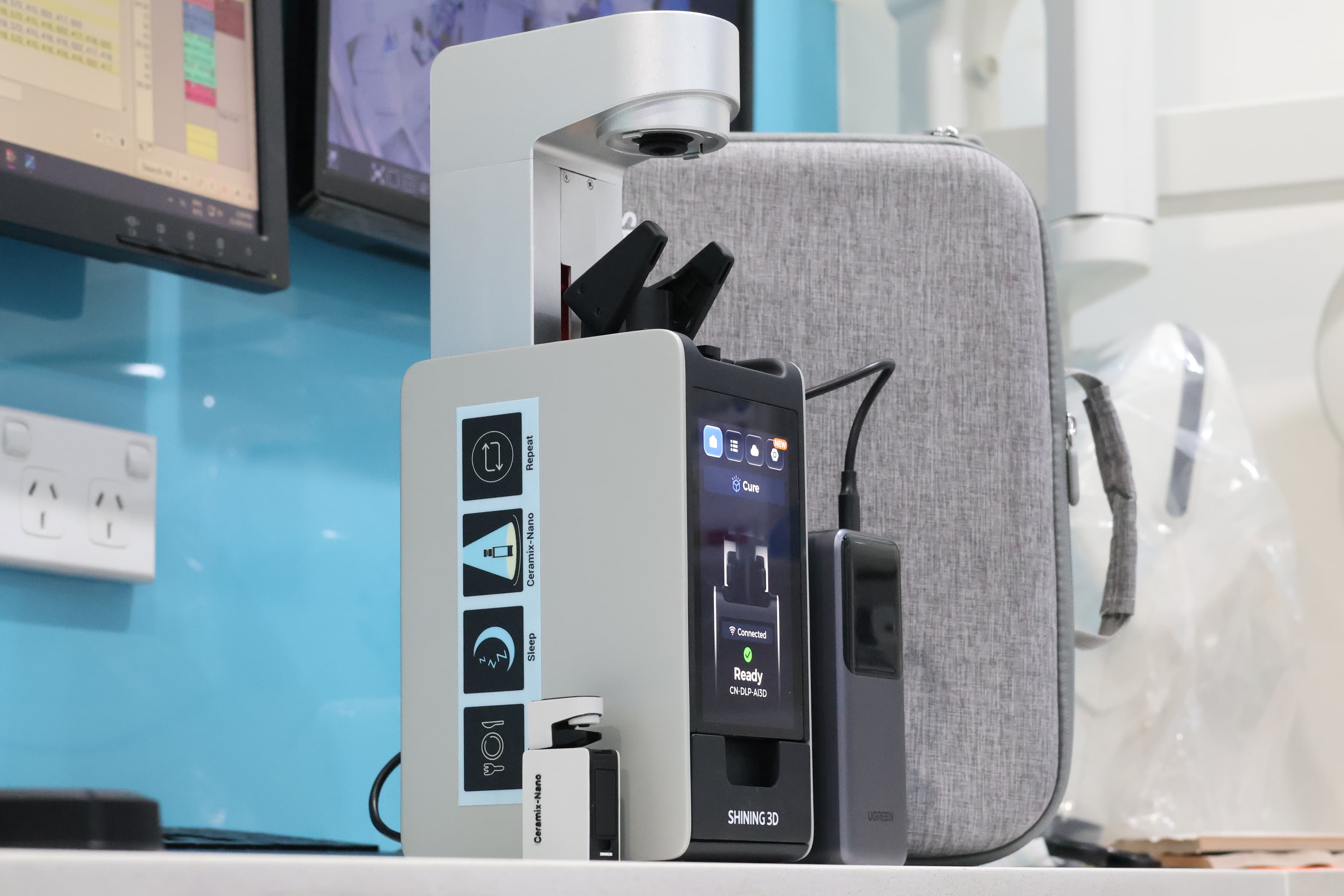
Shining 3D Ceramix-Nano
I had the chance to try out the Ceramix-Nano, a portable all-in-one print-and-cure unit that utilizes Adaptive Pneumatic Stereolithography (APS) to print highly filled composite resins. So how does this new printer stack up relative to its competitors?
The concept of restorations printed chairside has been gaining substantial traction in the past number of years. Shining 3D’s entry into this field certainly caught me by surprise and it’s definitely a unit to keep a very close eye on. I had the chance to try out the Ceramix-Nano, a portable all-in-one print-and-cure unit that utilizes Adaptive Pneumatic Stereolithography (APS) to print highly filled composite resins. So how does this new printer stack up relative to its competitors?
This is a personal and individual opinion on the Shining 3D Ceramix-Nano. Shining 3D nor any of its global distributors have not been involved in the writing or editing of this piece and have not restricted any conclusions made by myself of this product.
Notable features
- Straightforward physical set up
- Industry-leading low footprint - printer and cure in the one package
- Quiet operation
- One-and-done capsules
- Automated AI-driven slicing that favours multi-stacking for printing of multiple restorations
- Closed resin library that will be selectively open to a limited number of 3rd party manufacturers
- Limited material library - materials (as of October 2026) are rather opaque and top out at 55% ceramic filler (more translucent and higher-filled resins currently in development)
- Direct integration within the Shining FLOW ecosystem (intraoral scanner + CAD + CAM output)
- Print without plugging into a wall socket - suitable power bank required
Basics
| Printer size | 9 x 13 x 28cm |
| Weight | 13 bananas* |
| Technology | DLP |
| Print volume | 17 mm diameter, 38 mm height |
| Slicer | Accuware |
| XY resolution | 50 µm |
| Price guide | US$7000 |
* 1 banana = 0.15kg
Set up
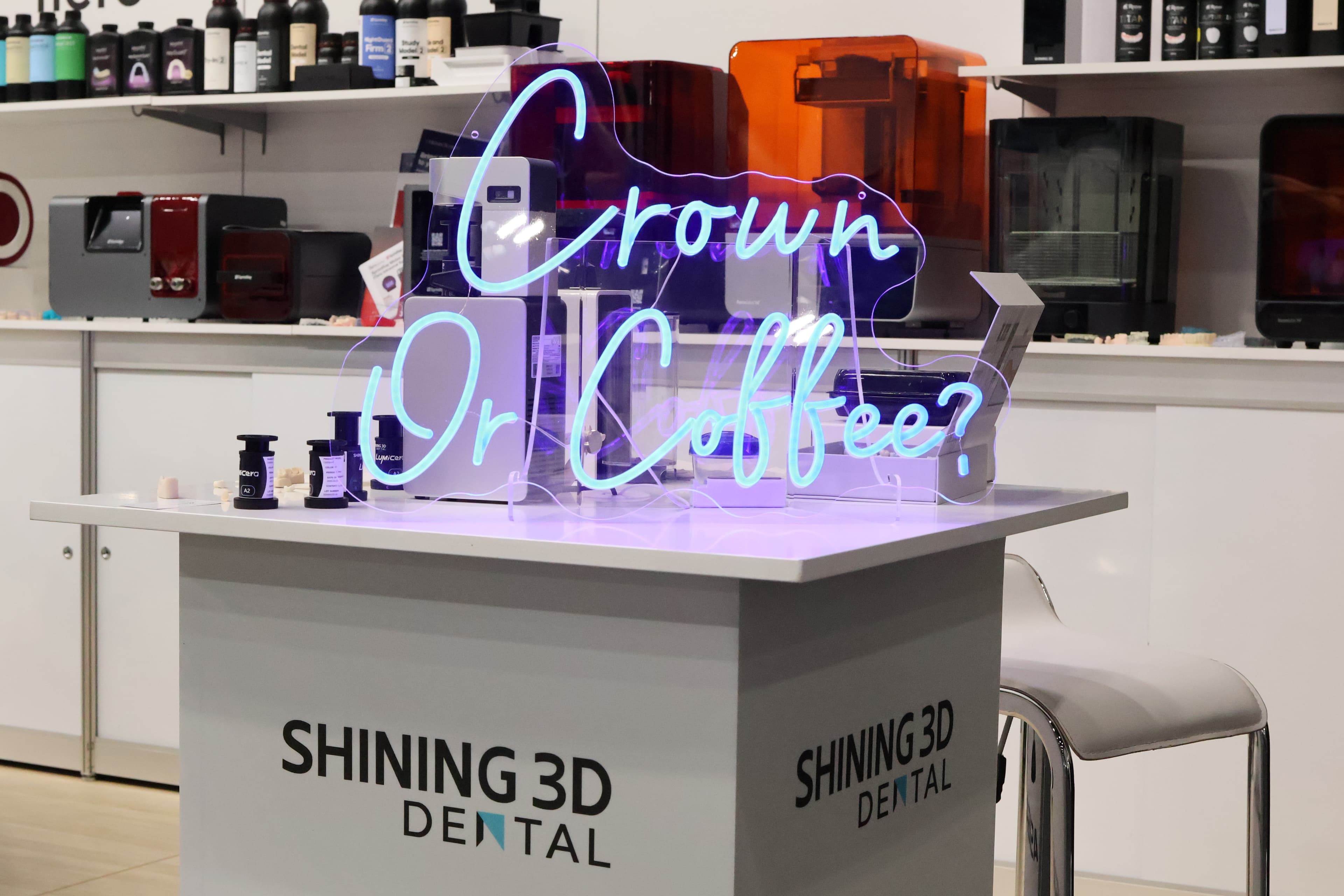
Setting up the Ceramix-Nano was very simple. It was up and running within minutes. The unit comes factory levelled and is essentially calibration-free with an automatic levelling system.
The printer UI is nicely laid out with a decent screen considering the printer size. It’s pretty easy to navigate through and rather self-explanatory.
One thing to note is that you will require WiFi connection to print with the Ceramix-Nano. Jobs are sent to the printer via WiFi through Accuware (Desktop) or alternatively through the Shining 3D cloud portal. Wi-Fi connection was relatively straightforward and occurred without a hitch in my experience, but I have anecdotally hear from other users that they had some initial trouble connecting via Wi-Fi, which was resolved by resetting the printer and/or modem.
One of the best things about this printer from a set up perspective is that you do not need to plug it into a wall socket for power - you can hook it up to a suitable power bank to achieve true portability and take the printer wherever it needs to be. This is amazing for multi-room and multi-associate practices.
Software
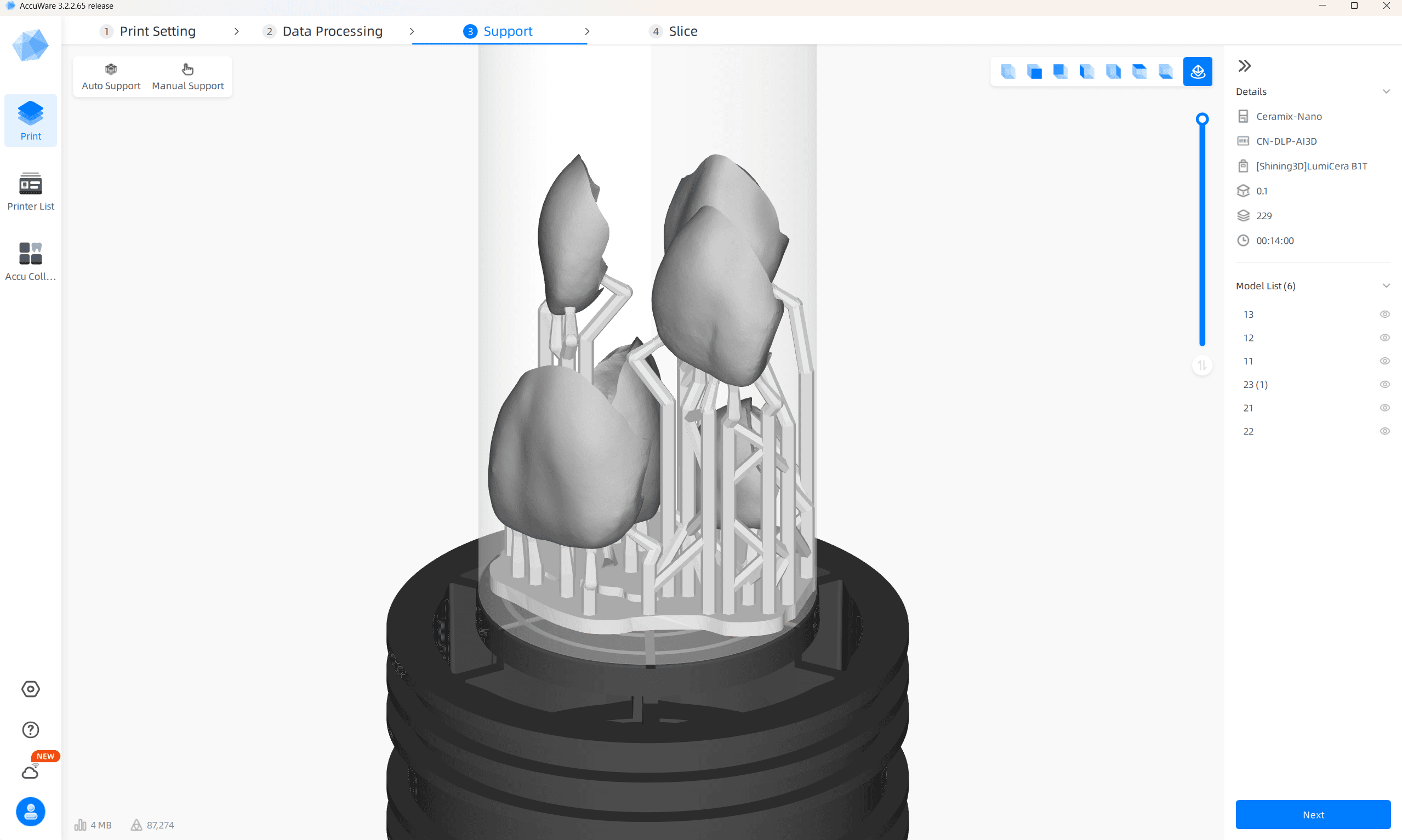
The Ceramix-Nano uses Accuware which was already great when I used it recently for the Aris, F1 and Cel. Performance particularly in the automated processes of this program has improved and continues to improve overall.
It follows a clean workflow from printer and material selection, object positioning and orientation, supporting and finally exporting/printing.
Support parameters for different printable applications have already been worked out for the user, as well as optimum orientation of each restoration. I found the automated orientation, supporting and slicing function worked pretty consistently when squeezing in 3-4 restorations within the one print. Beyond that it did start to be more unpredictable.
I do however wish that there was an option to allow some basic orientation and support editing after the AI function is performed – in its current state manually changing what was determined by the AI algorithm will by default remove all placed supports and part positioning which is a bit of a bummer as often all we need to do is add a support here or there. Slicing in the cloud portal also does not allow print/job editing, so my strong preference would currently be to use Accuware (desktop).
It should be noted that an update on AI integration will be processed by the end of 2026, allowing for improved support positioning and print orientation as well as easy-to-remove supports. This will also include smarter positioning and supporting for multiple inlays/onlays/veneers.
Resin library
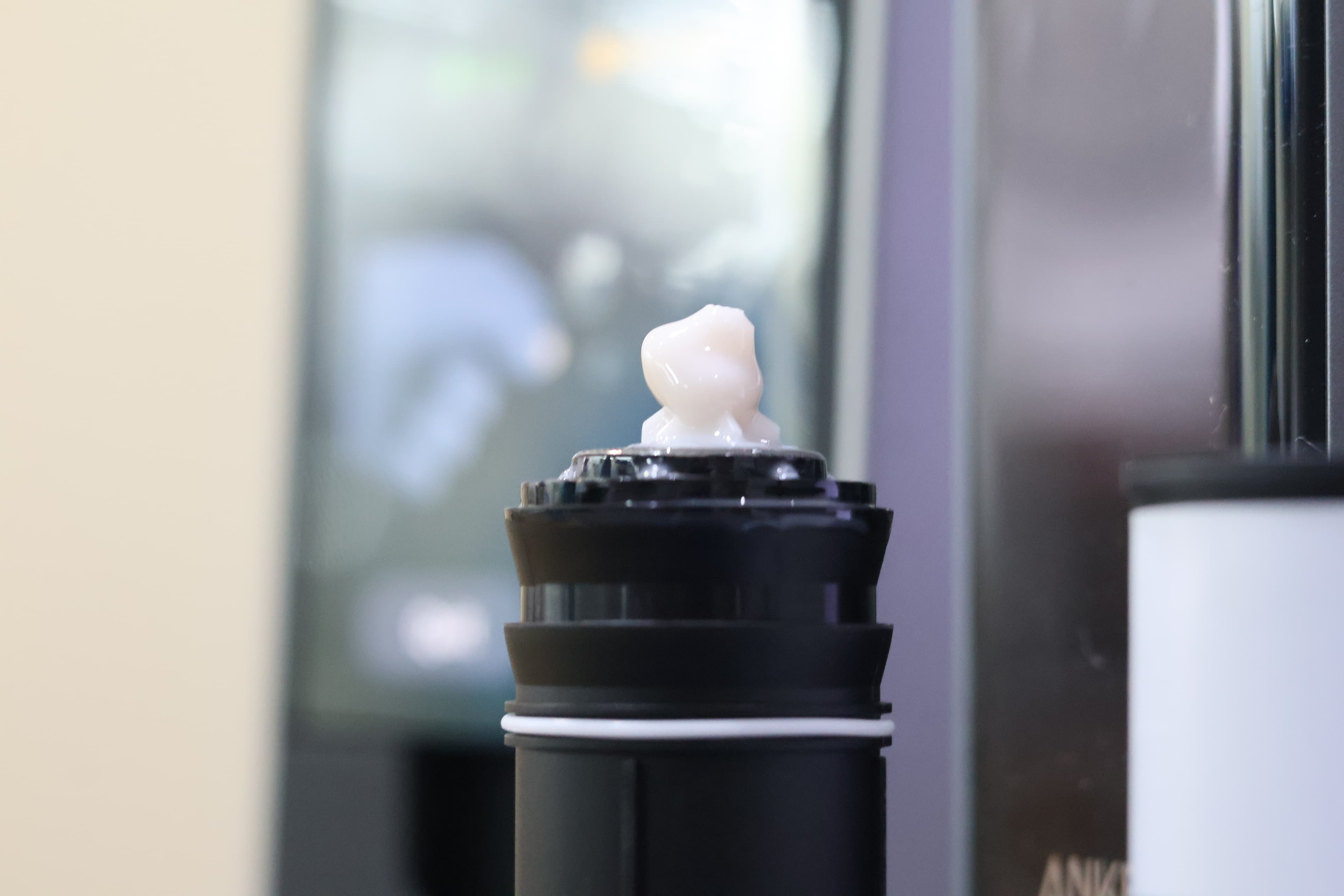
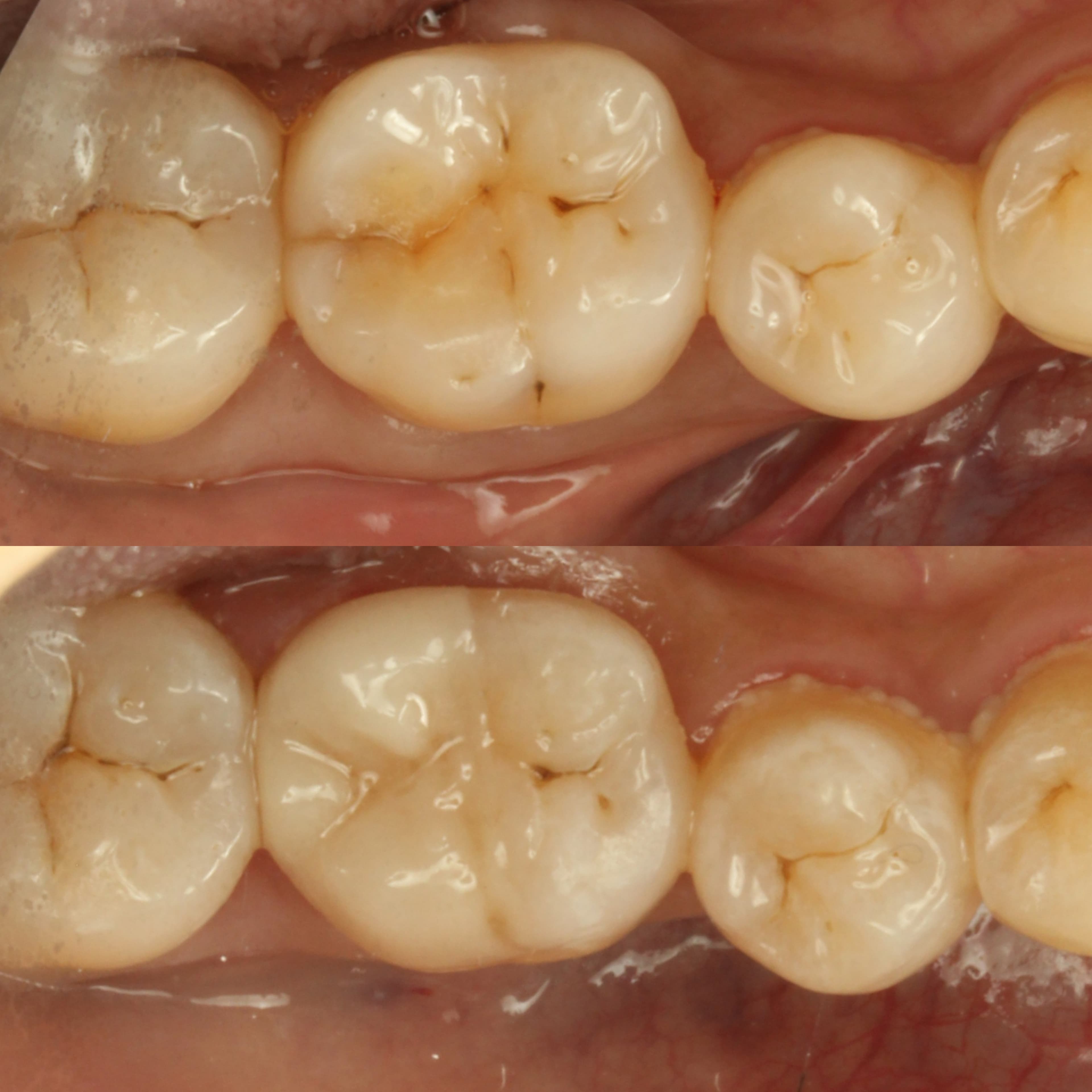
Probably the biggest shortfall of the Ceramix-Nano is its limited resin availability. As of October 2026 users may only use Shining 3D’s own Lumicera on the Ceramix-Nano, a 55%-filled printable composite that comes in low translucency (LT) and medium translucency (MT) variants. I highly recommend sticking to the MT version of this material as the LT variant is very opaque and not suitable in the aesthetic zone.
It should be noted that Shining 3D has recognized the shortcomings of Lumicera and a HT version of this material is on its way as well as a more highly-filled iteration – exciting and promising news. They cannot come soon enough!
Saremco Crowntec will also be printable using the Ceramix-Nano which will undoubtedly please many prospective European users.
The printing experience
The Ceramix-Nano workflow is pretty smooth and straightforward. First of all, the printer itself will guide you through the physical printing process. The wonderful thing about APS is that there is no manual mixing by the user – the printer will itself perform the priming process. This removes a potential cause of failure.
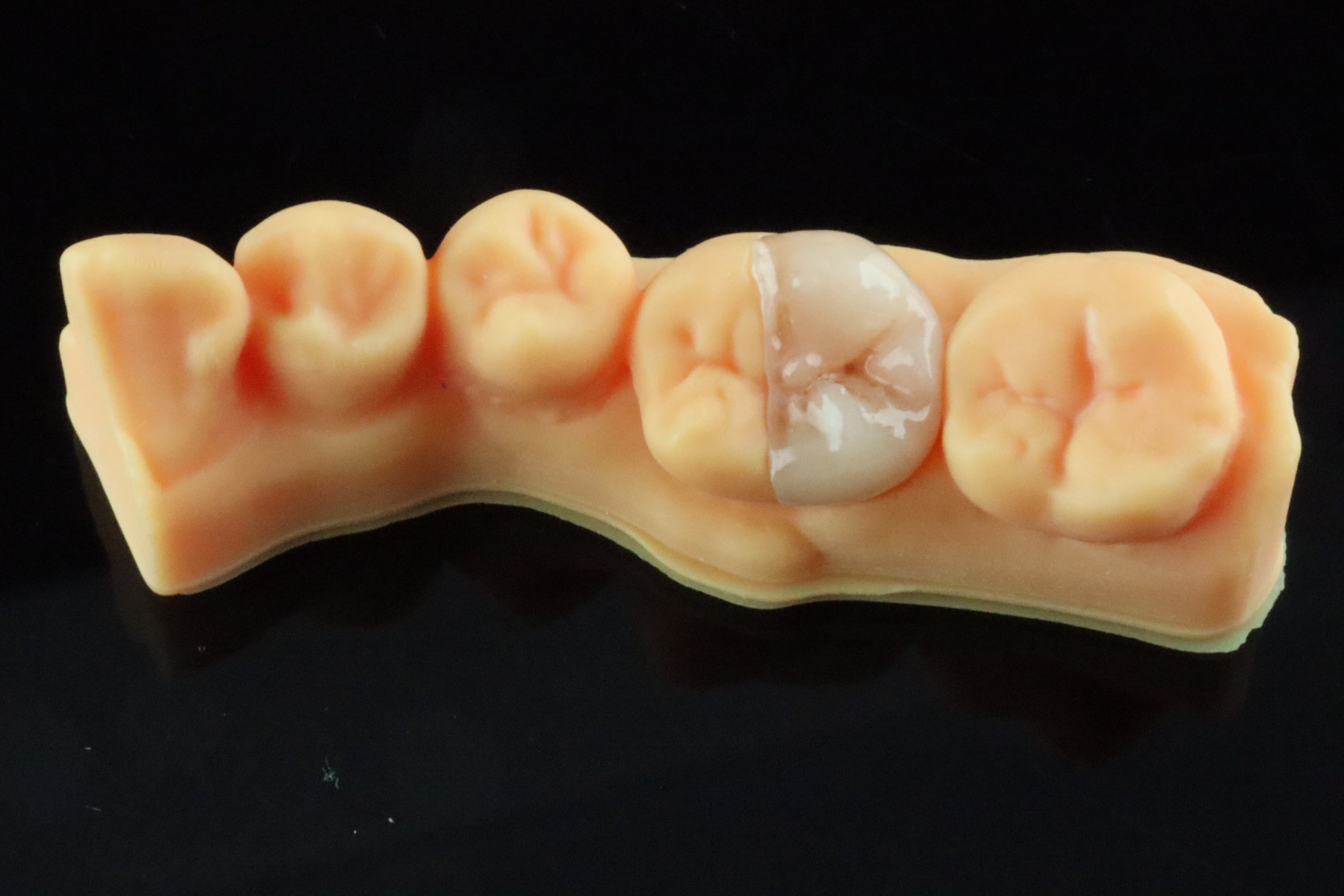
Print times are pretty fast, ranging from 7-8 minutes for a single crown all the way up to 16-18 minutes for a 3-unit bridge. I do actually really like the multi-stacking approach that Shining 3D has gone with during the AI-driven orientation and supporting function on Accuware. On competing systems, users can expect to waste some time playing “3D printing tetris” trying to squeeze multiple restorations within the one capsule. This is largely negated through the “One-Click” printing process that Accuware offers.
The bottleneck as with similar systems is with design – Shining 3D tries to offset this by offering an AI design service through their cloud portal. It’s a relatively new entrant to the AI CAD space so don’t expect results to be 100% consistent all the time.
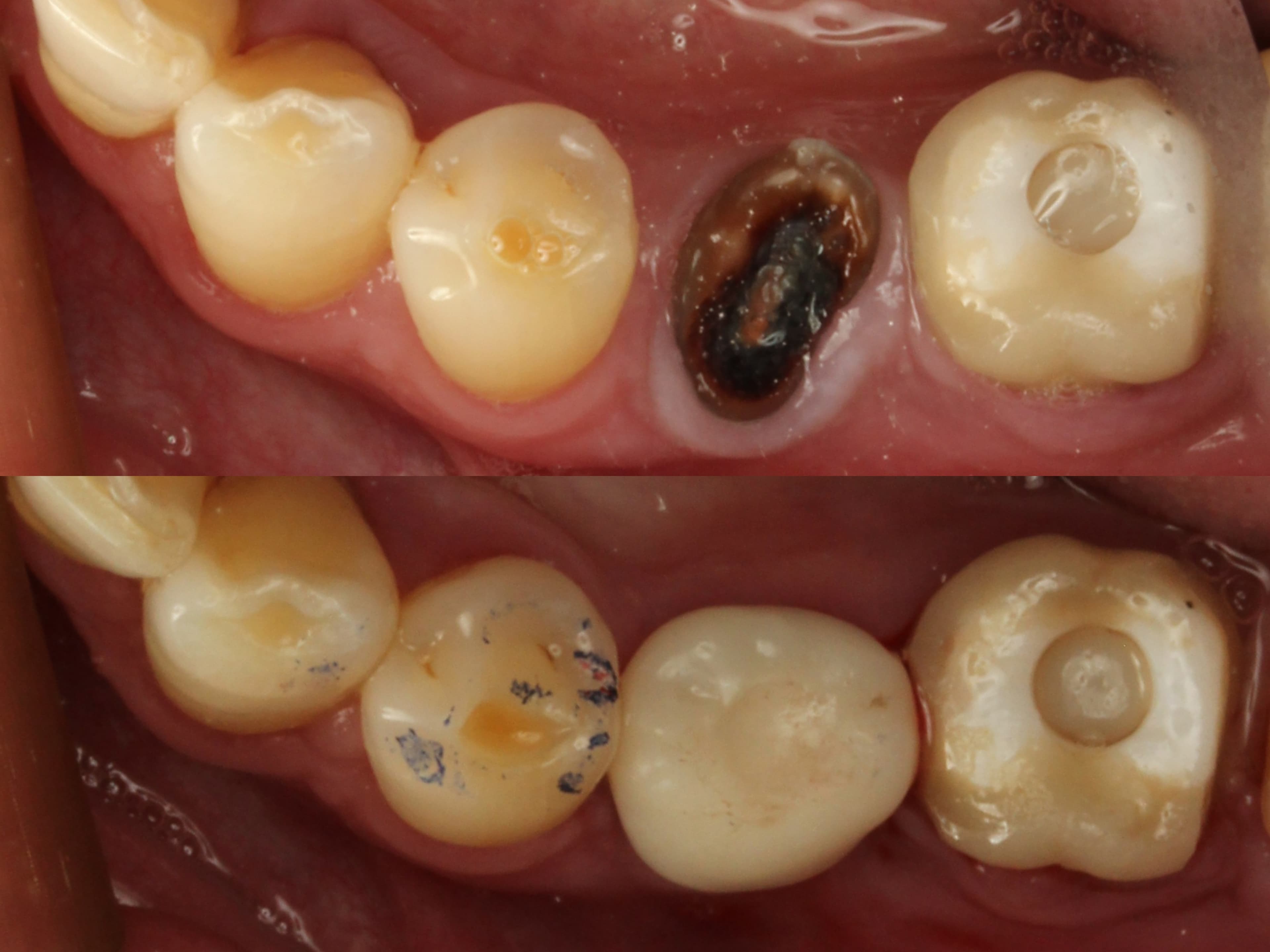
As with other competitors in this field. the big question is whether many practices can make an investment into the Ceramix-Nano financially sustainable and profitable. I think in many developed markets, it will make sense for many practices. Its lower price-point will definitely be attractive. As clinicians, we all remember trying to place those huge composite restorations directly and struggling with various matrices and bands etc. The Ceramix-Nano can effectively simplify and replace that process and ultimately produce a better restoration in those cases. However, at US$20-30 a pop per capsule, it’s still going to be a hard conversation to have in many situations.
Probably one of the biggest drawcards though has got to be how everything is integrated into the Shining Flow ecosystem – Shining 3D is in a rather unique position where they have full and direct integration amongst their scanners, design (AI or classic) and CAM output (printers) – very few companies can boast that.
Conclusion
Overall, the Ceramix-Nano is proving to be a viable and worthy contender in the field of 3D printed composites. Its fantastic portability and low profile is going to attract a lot of prospective customers. Currently its main weakness is the fact that only LT and MT resins are formulated for it, but it will be very interesting to see what Shining 3D comes up with in the coming 6-12 months to address this. Certainly it’s a unit to keep a very close eye on, particularly with full and direct integration within the Shining FLOW ecosystem.
3 points why you should get it
- Overall solid software workflow
- Amazing low profile and true portability
- Cost effective alternative solution to printing of highly-filled composites
3 points why you shouldn’t get it
- Limited resin availability currently (as of October 2026)
- Must incorporate 3D printed restorations in your practice to make this financially viable
- One-and-done capsules